

Industry 4.0 and the Productivity Paradox
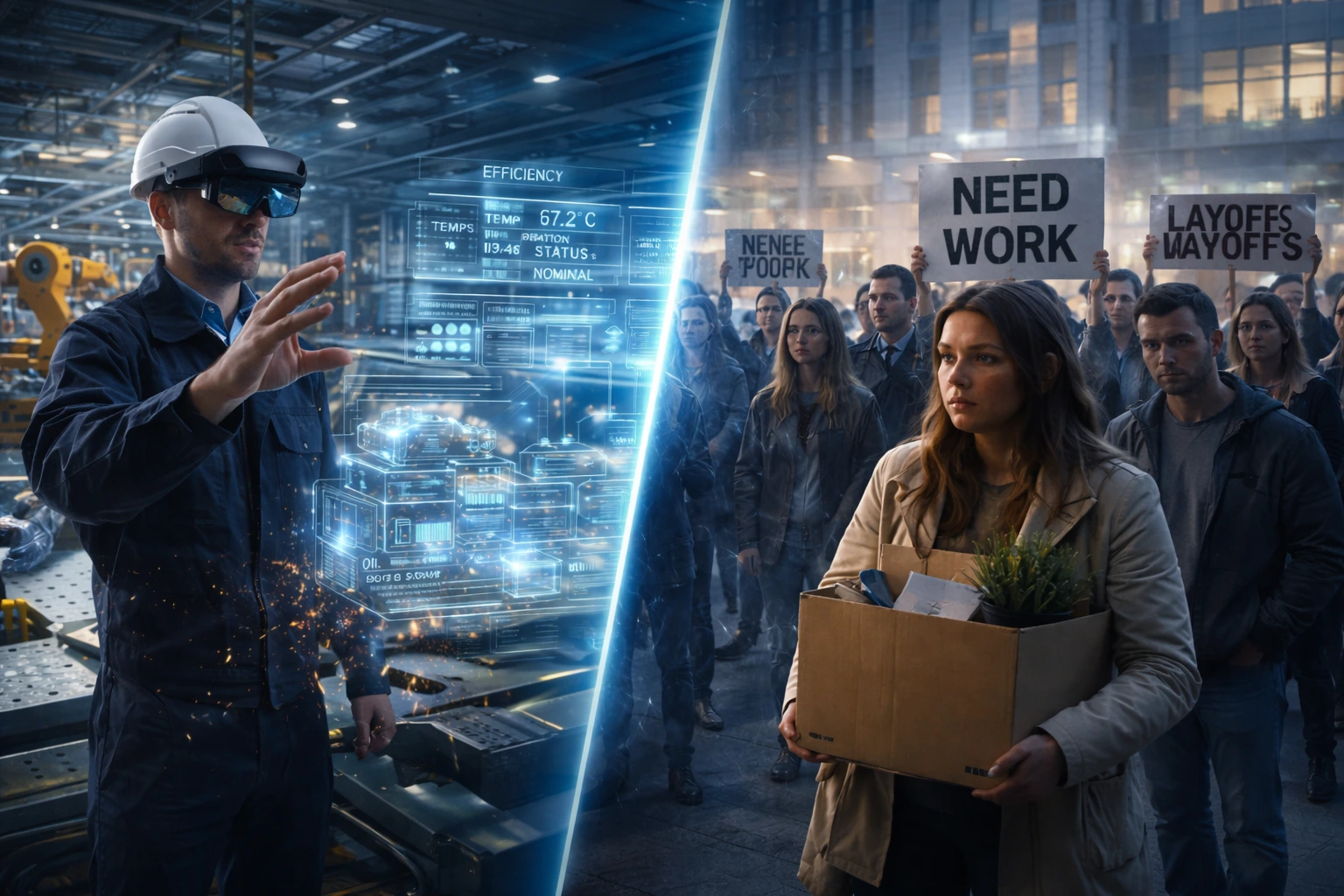
The Fourth Industrial Revolution is no longer theoretical. From AI-driven robotics to connected devices that talk across factory floors, Industry 4.0 is shaping a new economic order. Businesses hail it as a quantum leap in productivity, efficiency, and agility. But beneath the optimism lies a harder truth: entire job categories are being erased, not just transformed.
This isn’t another iteration of innovation, it’s a seismic reconfiguration of the relationship between labor and value. Are we building an economy where people thrive in augmented reality zones and smart factories, or one where human workers are simply phased out? While executives parade efficiency metrics and automation success stories, workers face algorithmic redundancy and digital obsolescence. The stakes couldn’t be higher.
Industry 4.0 is the battlefield where the future of productivity (and job security) is being decided. And the real question is: whose future is it?
Industry 4.0 Is Reshaping Global Labor Dynamics
Automation vs Human Capital: The Uncomfortable Trade-Off
In the rhetoric of progress, automation is liberation. But in practice, it often looks like mass layoffs justified by algorithmic efficiency. Industry 4.0 technologies are replacing human labor at a speed unmatched by any previous industrial revolution. The shift is sharpest in repetitive, rules-based roles warehouse operations, machine loading, basic inspection, where AI and robotics now outperform humans.
Yet there’s no escaping the fact that many of these jobs are not being replaced with better ones. Companies optimize labor costs while failing to reinvest in human capital. Instead of retraining, they offload. Instead of reskilling, they restructure. And for workers, that means displacement, not empowerment.
The Role of AI and Robotics in Workforce Redundancy
The cold logic of machine efficiency rarely accounts for human costs. Once deployed, robots don’t strike, tire, or ask for benefits. Companies under pressure to deliver shareholder returns are seduced by this scalability. According to McKinsey, up to 25% of jobs in developed economies could be automated by 2030.
What’s marketed as “digital transformation” is often a euphemism for workforce reduction. Productivity soars, but job security plummets.
Industry 4.0 Unlocks a New Tier of Productivity
Smart Manufacturing and Supply Chain Synchronization
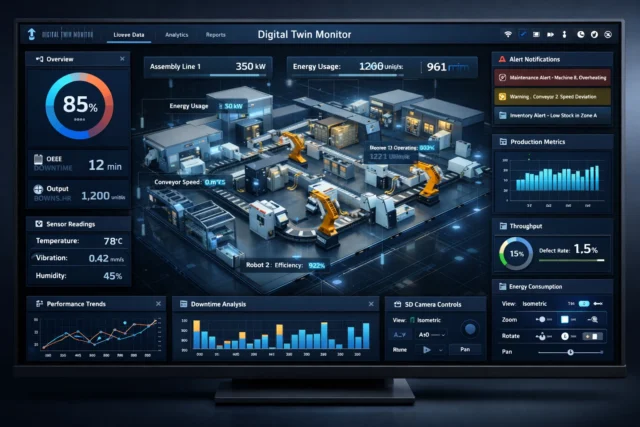
Where traditional systems react, Industry 4.0 anticipates. Real-time sensors, IoT connectivity, and machine learning have turned reactive supply chains into predictive ecosystems. Downtime is minimized. Waste is slashed. Efficiency is no longer about marginal improvements; it’s systemic.
Companies deploying smart systems report shortened production cycles and improved agility. Deloitte notes that smart factories can deliver up to 20% improvement in quality and yield.
This isn’t automation for its own sake; it’s orchestrated at scale.
Efficiency Gains That Weren’t Possible Before
Tasks once handled manually are now executed by intelligent systems that learn and adapt. Machine vision performs complex quality checks. AI orchestrates adaptive production schedules. Predictive maintenance eliminates costly breakdowns.
Every node in the system becomes self-aware and collectively optimized.
Traditional vs Smart Manufacturing: Key Differences
| Feature | Traditional | Industry 4.0 |
| Data Access | Manual & Delayed | Real-time via IoT |
| Production Flow | Linear & Reactive | Adaptive & Predictive |
| Human Involvement | Labor-intensive | Skill-based Supervision |
Augmented Reality Is the Unexpected Hero of Industry 4.0
How Augmented Reality Elements Boost On-Site Efficiency
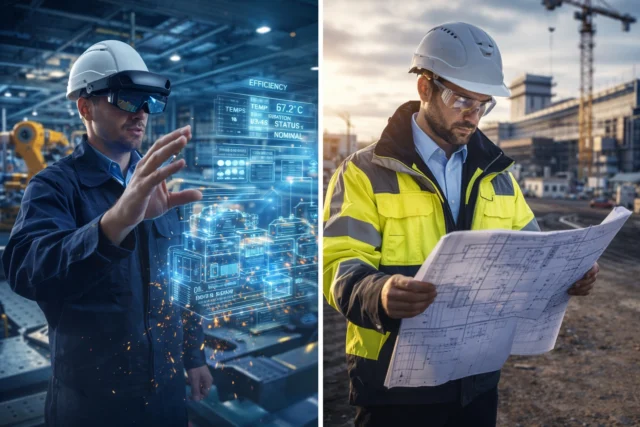
Forget consumer gadgets, augmented reality (AR) is redefining industrial performance. AR headsets now guide assembly line workers with real-time overlays, reducing errors and accelerating task completion. In logistics, AR improves picking speed and accuracy. In maintenance, it delivers instant diagnostics through visual cues.
These augmented reality elements are quietly becoming the backbone of the new factory floor. Workers no longer memorize manuals; they interact with live, contextual instructions. Productivity improves not because humans are replaced, but because they are enhanced.
The Augmented Reality Zone: A Training Revolution
AR isn’t just about doing the job; it’s about learning to do it faster. Inside the augmented reality zone, onboarding no longer requires weeks of classroom instruction. Immersive simulations train employees in real-world conditions before they ever touch a tool.
The result? Accelerated time to competency, lower training costs, and fewer operational errors. AR is collapsing the learning curve and democratizing access to complex roles, making it a cornerstone of Industry 4.0.
Industry 4.0 and the Global Skills Divide
Who Wins and Who Loses in the Automation Race
Industry 4.0 isn’t evenly distributed. While urban tech hubs flourish, rural and low-skilled regions are left behind. The digital divide becomes an economic chasm. Workers without access to training infrastructure are displaced. not by choice, but by geography.
This isn’t creative destruction; it’s structural exclusion. As industries digitize, those without digital fluency are pushed out of relevance.
Augmented Reality Meta and the Reskilling Imperative
The promise of augmented reality meta is that it can bridge this gap, if deployed strategically. Governments and enterprises must invest in AR training ecosystems to provide inclusive access to technical upskilling.
According to MIT Technology Review, AR can reduce training time by over 50%. But only if we make it a public good, not a corporate privilege.
Upskilling Potential by Technology Type
| Technology | Training Time | Accessibility | Job Mobility |
| Robotics | High | Low | Medium |
| AR Training | Low | Medium | High |
| AI Systems | Medium | Low | Low |
The Ethical and Economic Debate Industry Doesn’t Want
Productivity at What Cost?
While Industry 4.0 boosts output, it also commodities labor. Human roles are redefined not by purpose, but by performance metrics. The worker becomes a node in a feedback loop, valuable only when efficient.
We must confront this techno-ethic dilemma. Are we optimizing systems or erasing people?
As Harvard Business Review warns, hyper-productivity can lead to toxic work cultures, where people are measured only by how machine-like they can become.
Redesigning Work or Reinforcing Inequality?
When innovation is defined solely by efficiency, inequality becomes institutionalized. The winners are those who control the systems. The losers? Everyone else.
Industry 4.0 must not become a euphemism for job compression and wage suppression. We need policies, not platitudes. Worker-centered design, not shareholder-centered automation.

Industry 4.0 Must Serve People, Not Just Profit
Industry 4.0 is a revolution with the power to radically transform productivity, innovation, and human potential. But it will either democratize opportunity or deepen inequality, depending on how we design it.
We must choose augmentation over elimination. Augmented reality, AI, and smart systems can empower the workforce, not replace it if leaders invest in people as aggressively as they invest in machines.
The future of work is not written in code. It will be shaped by the decisions we make now about ethics, access, and the value of human contribution. Industry 4.0 must not become a machine-led meritocracy. It must be a human-centric evolution, where productivity and dignity advance together.
References
The Future of Work in Europe — McKinsey
Expected Impact of Industry 4.0 on Employment in Selected Regions — MDPI
Augmented Reality in Industry 4.0 Assistance and Training — MDPI
A Systematic Review of Industry 4.0 Technology on Workforce Employability and Skills — MDPI
IoT & Industry 4.0: Seamless Integration or Cyber Nightmare? – H-in-Q