


How AI Is Collapsing the Knowledge Services Economy
Traditional knowledge‑intensive services once thrived on the simple formula of time × expertise. Lawyers, consultants, auditors, and marketers charged by the hour because knowledge scarcity guaranteed pricing power. But today, AI is rewriting that equation. Automated workflows, large language models, and intelligent decision systems can now perform tasks in minutes that used to take highly paid human labor hours. This is not a temporary disruption. It is a structural shift in how professional value is created and monetized. Firms built on selling human time are suddenly exposed to existential pressure. As the stock market prices in this shift, the core question becomes: what happens when knowledge creation itself is automated? If AI replaces business models that sell time, then survival depends on rethinking value delivery entirely. This article unmasks the forces redefining the future of work, and why winning companies will sell systems, not hours.
AI Is Ending the Billable Hour Business Model
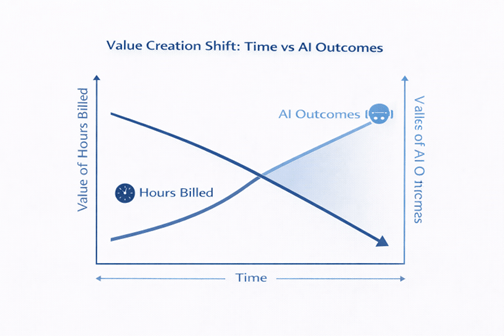
Legacy pricing tied value to hours worked through consulting rates, billable time, and audit sheets. AI now disrupts that model. Sophisticated ai machine systems deliver analysis, contracts, and summaries in seconds, exposing the inefficiency of paying for effort over outcomes.
Budgets are shifting toward measurable results and fixed pricing. As AI compresses delivery cycles, time no longer justifies price, accelerating margin pressure and commoditization.
From Selling Time to Selling Outcomes with AI
Clients no longer value the number of hours spent; they want certainty of outcome. Companies like Anthropic and OpenAI are developing systems that outperform humans on rote tasks. According to McKinsey, advanced AI adoption can dramatically reduce costs and accelerate delivery in professional services, a direct threat to hourly revenue models.
When technology guarantees faster turnaround, the economic narrative shifts toward guaranteed impact. Outcome-driven pricing aligns incentives with results, forcing firms to redesign commercial models around measurable transformation rather than logged effort.
Why Time Is No Longer a Proxy for Expertise
Traditionally, time signaled expertise: more hours equaled deeper thought. But with AI, that proxy disappears. An ai imagine interface can synthesize complex insights faster than any human team. The consequence: knowledge markets will pay premiums for decision quality, judgment, and implementation ecosystem design, not hours logged.
Expertise becomes embedded in systems rather than embodied solely in individuals. Firms must therefore shift from demonstrating effort to demonstrating decision superiority and execution architecture.
Raw Expertise Has Become an AI Commodity
Before AI, deep domain expertise was scarce and commanded premium pricing. Lawyers, auditors, and consultants monetized knowledge that required years to acquire. Today, ai machine systems encode and distribute that expertise instantly, eroding scarcity-based margins.
Intelligent systems now generate and refine work once reserved for senior professionals. This democratization flattens hierarchies and intensifies competition across service organizations.
From Competitive Advantage to Ubiquity with AI Imagine Systems
Systems like ai imagine platforms democratize proficiency. A junior marketer with the right AI prompt can produce strategy drafts that once required senior experts. This flattens traditional hierarchies and shifts competitive differentiation away from knowledge possession toward knowledge orchestration and selective application. IBM highlights the transition from human augmentation to encoded organizational capability. The competitive advantage shifts from owning knowledge to coordinating and contextualizing it effectively.
Judgment and Contextual Thinking Are the New Edge
When basic expertise is widely available, the only remaining edge is contextual judgment; Knowing which model to deploy, when to override automation, and how to interpret ambiguous signals defines strategic value. Firms that neglect human oversight risk self-commoditization. Intelligent systems require strategic governance layers. The premium moves toward interpretation, scenario planning, and accountability structures. Organizations that merge AI efficiency with disciplined human judgment retain defensible positioning in an increasingly commoditized knowledge market.
The Rise of the Architect: AI‑Centric Role Redesign
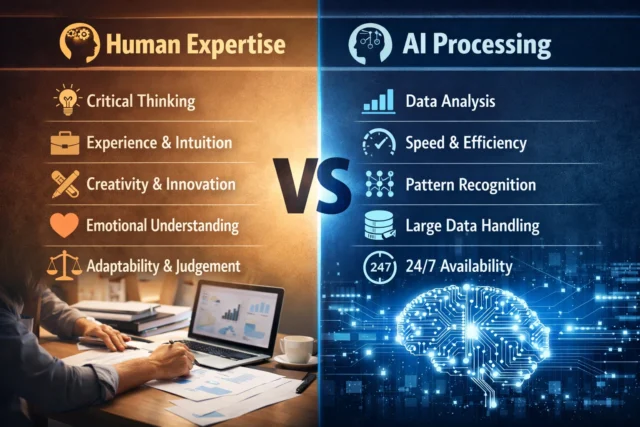
A profound role shift accompanies the economic change. The craftsman model; where labor produces deliverables, is giving way to the architect model: designing systems that integrate humans and AI machines. The architect does not “produce” in the traditional sense; instead, they build frameworks, platforms, and decision engines that scale.
This strategic pivot signals a durable realignment of talent structures. Firms must recruit systems thinkers capable of building repeatable infrastructures rather than expanding headcount for incremental production.
Outgrowing the Craftsman Model in the AI Era
Craftsmen scale by hiring more people. Architects scale by building AI‑enabled systems. Service firms that cling to manpower expansion risk structural stagnation. Harvard Business Review’s analysis of generative AI in knowledge work underscores the urgency of redesigning roles around system supervision and strategic oversight. The shift demands investment in digital infrastructure and cultural adaptation.
Building Scalable Systems, Frameworks, and IP with AI
Winning firms develop proprietary datasets, automation workflows, and reusable decision frameworks. Intellectual property migrates from reports to platforms. Hybrid models emerge where AI augments expert teams while enabling scalable delivery. The architect mindset treats AI as infrastructure, not a tool. Organizations that codify repeatable insights into technology create exponential leverage and defensible differentiation.
Firm Archetypes in the AI Era
| Archetype | Key Traits | Risk Level |
| Time‑Based Traditional | Billable hours, manual processes | High |
| Hybrid AI Enablement | Uses AI tools, retains judgment | Moderate |
| AI System Architect | Owns data, built automation platforms | Low |
Intellectual Disintermediation: The Real AI Threat
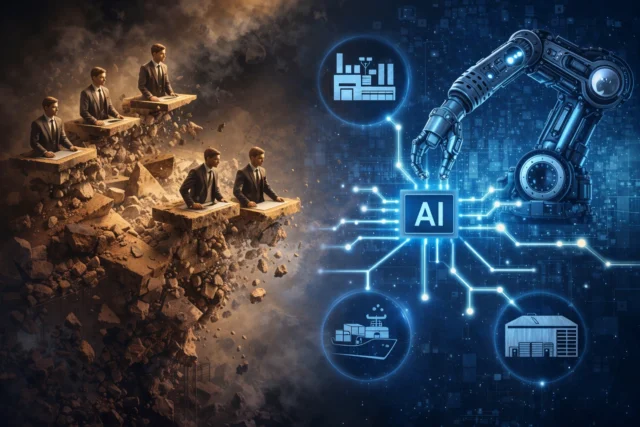
AI lowers the marginal cost of knowledge transmission, undermining intermediaries that once profited from connecting expertise to client needs. Intelligent systems now perform that matchmaking directly, compressing layers between data and decision output. As AI autonomously synthesizes analysis, intermediary value declines. Automation bypasses hierarchical review structures, forcing firms to embed within AI ecosystems or risk disintermediation.
Why AI Machines Undercut Human‑Heavy Services
Routine legal reviews, audits, research, and standardized consulting outputs are increasingly automated, shifting from premium services to baseline AI functions. Human-heavy models rely on linear labor and supervision, while AI embeds process logic directly into systems. As automation matures, pricing power erodes and margins decline under faster, system-driven competition.
Market Research, Legal, and Marketing Are First in Line
Market research, legal documentation, compliance auditing, and performance marketing are particularly exposed because they rely heavily on structured cognitive repetition. Generative AI systems are capable of drafting contracts, synthesizing survey findings, producing competitive intelligence summaries, and generating campaign variants with minimal human intervention.
According to MIT Technology Review, generative AI is already automating many high-volume knowledge tasks once outsourced to junior professionals. Firms slow to adopt AI risk being outcompeted by those who integrate it strategically.
AI Winners and Losers: Which Business Models Will Survive?
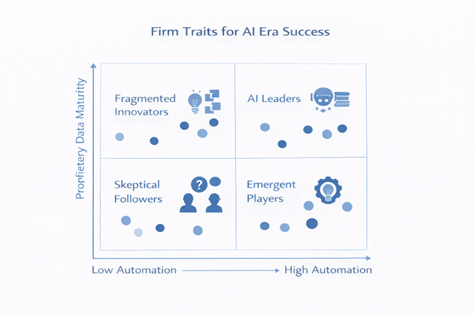
Not all firms are equally exposed. Understanding structural traits helps predict winners and losers.
Traits of Vulnerable Firms: Time, People, No IP
Organizations most at risk rely heavily on billable hours, large execution teams, and lack proprietary data for differentiation. Their processes remain manual or semi-automated, limiting leverage. Without embedded AI, they scale by adding headcount, increasing costs. As AI lowers advisory pricing expectations, margins shrink and client tolerance for inefficiency declines. Manpower dependence becomes structural vulnerability.
- Heavy reliance on billable hours
- High dependence on manpower
- Little proprietary data
- Low automation
Such firms face relentless cost pressure as AI lowers the price of outcomes.
What Winning Companies Look Like: AI Products, Data, Platforms
Survivors exhibit a fundamentally different architecture. They design AI-centric products and services that embed intelligence directly into client workflows. They accumulate proprietary data assets that enhance system performance over time, creating feedback loops that competitors cannot easily replicate. They codify structured decision frameworks into repeatable automation pipelines.
Many adopt hybrid SaaS plus consulting revenue models, blending scalable digital platforms with high-value strategic oversight.
- AI‑centric products and services
- Proprietary data assets
- Decision frameworks
- Hybrid SaaS + consulting revenue models
Deloitte emphasizes that firms blending tech platforms with domain expertise are most likely to thrive.
AI Doesn’t Replace Consultants It Replaces Business Models
AI Imagine Tools Shift Focus to Capabilities Over Labor
AI imagine platforms enable clients to generate insights and recommendations independently, shifting power away from traditional service providers. Instead of outsourcing execution, buyers expect embedded capability. Firms must design AI-enabled environments that enhance autonomy while maintaining oversight. Monetization shifts toward continuous capability, supported by transparent, reliable, and governed systems.
Decision Engines vs. Deliverables: What Clients Really Want Now
Client expectations are converging around speed, predictability, cost efficiency, and automation of repeatable workflows. Deliverables as static documents hold diminishing value compared to dynamic decision engines that update continuously.
According to the World Economic Forum, workflow automation and decision augmentation are becoming foundational economic capabilities across industries. Organizations increasingly prioritize systems that support ongoing optimization rather than episodic consulting engagements. This preference reinforces the decline of labor-based pricing. Firms that align offerings with decision enablement rather than report production secure stronger strategic positioning in the AI-driven marketplace.
- Faster decisions
- Predictable outcomes
- Lower costs
- Systems that automate repeatable work
Strategic Shift: How AI Rewrites the Logic of Service Firms
Here’s a clear comparison of old logic vs. new logic enabled by AI:
Old World vs. New AI‑Powered World
| Old Value Logic | New AI‑Driven Logic |
| Selling labor | Selling systems |
| Selling execution | Selling decision capability |
| Selling deliverables | Selling continuous capability |
| Human scaling | Tech scaling |
This transformation reconfigures the economic DNA of professional services. Traditional logic emphasized visible effort, hierarchical review, and incremental hiring. The AI-driven model prioritizes scalable systems, codified knowledge, and automation infrastructure.
Competitive advantage migrates from workforce size to platform maturity. The shift is structural, not cosmetic. Firms that recognize this redefinition of value capture can reengineer operating models proactively. Those that hesitate will confront declining differentiation as AI-native competitors establish cost and speed superiority.
Human Scaling Is Dead: AI System Scaling Is the Future
Human scaling requires adding personnel, increasing coordination complexity, and expanding managerial oversight. AI system scaling operates on a different logic. Once an intelligent workflow or decision engine is built, it replicates value across clients at minimal incremental cost.
This efficiency reshapes growth economics. Marginal costs remain low while output expands, enabling exponential leverage. Firms prioritizing system design gain durable scalability advantages over labor-centric competitors.
Selling Execution vs. Selling Judgment in the AI Economy
Execution is now low‑value because AI can perform tasks. Judgment and oversight (knowing when and why to apply solutions) become premium skills. This aligns with IBM’s research into how AI redefines job roles and organizational structures.
Why This AI Shock Is Hitting Now
The AI Machine Wave Has Moved Beyond Support Functions
AI no longer automates only back-office tasks. The ai machine wave now targets core revenue activities such as legal drafting, research synthesis, and strategic modeling. When AI integrates directly into value creation, it reshapes commercial logic. Service firms can no longer treat automation as operational support; it is now competitive infrastructure.
Strategic Services Can No Longer Hide from Disruption
Strategic advisory once appeared protected by human judgment and ambiguity. That protection is weakening. AI now assembles scenarios, evaluates risks, and structures options rapidly. Clients expect decision-ready systems, not presentations. Firms that fail to embed AI into strategic delivery will face fee compression and accelerating competitive pressure.
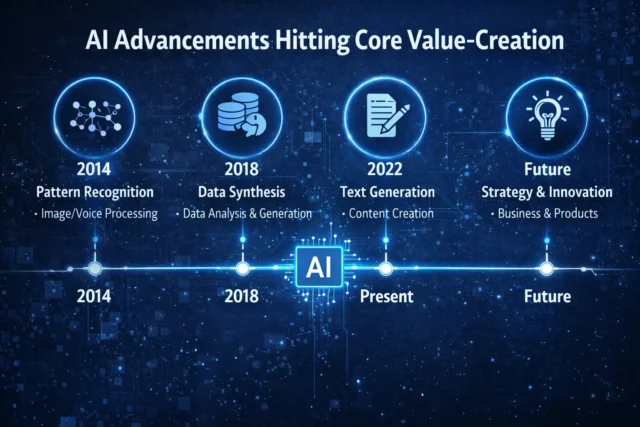
AI Is the Final Test for Intellectual Service Firms
The end of the billable hour is not a trend; it is an economic truth powered by AI. Firms that insist on selling time will fracture under competitive pressure, while those that embrace AI‑driven systems will scale exponentially. Successful organizations will integrate AI into their core, turning ai machine capability into decision engines, platforms, and strategic assets. The market no longer rewards effort; it rewards outcomes, automation, and continuous capability enhancement. This is the definitive moment in professional services history: AI does not replace consultants, it replaces their old ways of capturing value. The future belongs to firms that see beyond hours and into intelligent systems, data assets, and decision‑centric business models.
References
How Generative AI Redefines Organizational Roles – Harvard Business Review
Artificial Intelligence: The Next Digital Frontier – McKinsey
AI in Professional Services: Strategic Shifts – Deloitte
Future of Jobs Report 2023 – World Economic Forum
How Generative AI Impacts Knowledge Work – MIT Technology Review
AI Talent Transformation and Role Design – IBM
The Responsible AI Illusion: Governance or Greenwashing? – H-in-Q